No sun protection needed today (UV stays below 3)
Max today · 11:00 — UV 1 · Low · Clear sky: 1 at 12:00
- No protection needed
- You can safely enjoy being outside
 6°95%27°93%2
 8°92%29°90%29°87%29°85%2
 10°83%210°81%2
 9°87%2
Sun & moon in Vancouver
The curve traces the sun's height above the horizon through the day: 0° is the horizon, 90° is straight overhead. The higher the sun climbs, the shorter the path its rays take through the atmosphere — and the stronger the UV. The part below 0° is night.
Detailed hourly UV index — Today, Nov 17
Peak UV 1 at 11:00 · Vancouver · Local time (PST)
The solid line is the hourly UV forecast: the UV index expected each hour, with cloud cover taken into account. The dashed line is the clear-sky UV, the level it would reach under a cloudless sky. The gap between the two lines shows how much the clouds are lowering the UV.
Detailed hourly UV index — Tomorrow, Nov 18
Peak UV 0.6 at 13:00 · Vancouver · Local time (PST)
Hour-by-hour UV index for today & tomorrow
Detailed hour-by-hour UV index forecast for Vancouver — today and tomorrow. Includes UV level, clear-sky UV, weather conditions, and temperature for each hour.
Today — Nov 17
| Hour | UV | Clear sky | Weather |
|---|---|---|---|
| 05:00 | 0.0 – Low | 0.0 | 5° |
| 06:00 | 0.0 – Low | 0.0 | 5° |
| 07:00 | 0.0 – Low | 0.0 | 5° |
| 08:00 | 0.1 – Low | 0.2 | 6° |
| 09:00 | 0.4 – Low | 0.5 | 7° |
| 10:00 | 0.8 – Low | 1.0 | 8° |
| 11:00 | 1.0 – Low | 1.4 | 9° |
| 12:00 | 0.8 – Low | 1.5 | 9° |
| 13:00 | 1.0 – Low | 1.3 | 9° |
| 14:00 | 0.7 – Low | 0.8 | 10° |
| 15:00 | 0.4 – Low | 0.4 | 10° |
| 16:00 | 0.1 – Low | 0.1 | 9° |
| 17:00 | 0.0 – Low | 0.0 | 8° |
| 18:00 | 0.0 – Low | 0.0 | 7° |
| 19:00 | 0.0 – Low | 0.0 | 6° |
| 20:00 | 0.0 – Low | 0.0 | 5° |
| 21:00 | 0.0 – Low | 0.0 | 5° |
Tomorrow — Nov 18
| Hour | UV | Clear sky | Weather |
|---|---|---|---|
| 05:00 | 0.0 – Low | 0.0 | 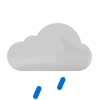 6° |
| 06:00 | 0.0 – Low | 0.0 | 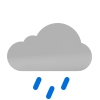 6° |
| 07:00 | 0.0 – Low | 0.0 | 6° |
| 08:00 | 0.1 – Low | 0.2 | 6° |
| 09:00 | 0.1 – Low | 0.5 | 6° |
| 10:00 | 0.2 – Low | 0.9 | 7° |
| 11:00 | 0.3 – Low | 1.2 | 8° |
| 12:00 | 0.5 – Low | 1.3 | 8° |
| 13:00 | 0.6 – Low | 1.1 | 9° |
| 14:00 | 0.4 – Low | 0.7 | 9° |
| 15:00 | 0.2 – Low | 0.3 | 9° |
| 16:00 | 0.1 – Low | 0.1 | 8° |
| 17:00 | 0.0 – Low | 0.0 | 7° |
| 18:00 | 0.0 – Low | 0.0 | 6° |
| 19:00 | 0.0 – Low | 0.0 | 5° |
| 20:00 | 0.0 – Low | 0.0 | 5° |
| 21:00 | 0.0 – Low | 0.0 | 5° |
5-Day UV Forecast for Vancouver
The 5-day UV index forecast shows each day's peak UV and the time it's reached, plus daily high and low temperatures and an hourly UV curve, so you can plan sun protection for the days ahead.
5°97°129°1510°187°6°96°128°159°186°5°96°1210°1511°187°4°95°129°158°188°4°95°127°158°186°Peak midday UV by month in Vancouver
It's November: on clear days, the midday sun here usually peaks around UV 1–2. That's low: most people don't need sun protection at this level.
Over the year, the sun is strongest in June–July (up to UV 9 on clear days) and weakest in December (around 1 at midday). Treat these numbers as the most sun you should expect around noon: clouds typically lower the real value, while reflections from snow, sand or water can add to the UV your skin actually receives. Today's actual UV is in the forecast above.
Each bar shows the range the midday UV index moves through on clear days in that month, from the gentlest days up to what the strongest days typically reach, based on 17 years of satellite data (2004–2020). The small light line inside a bar is an ordinary day's midday level.
Based on TEMIS data. Copyright © KNMI/ESA — https://www.temis.nl/
In November the strong sun is in the southern hemisphere: UV reaches high levels across most of it, while the northern hemisphere outside the tropics has its mild season.
The UV year at a glance
Months when the midday sun gets strong enough to need protection. Based on clear days; clouds typically lower UV.
UV in Vancouver: today, tomorrow and through the year
There's little to worry about in Vancouver today, with UV peaking at just 1, below the level where sun protection starts to matter.Tomorrow brings more of the same, with UV staying just as low.This is the quietest stretch of the year for UV in Vancouver, and low readings through November are the seasonal norm.
Location, daylight and sky in Vancouver
Key facts
Sun & Daylight Hours in Vancouver
Seasonal daylight range at this latitude
Similar daylight hours as Montreal, Canada — on the same parallel
UV index map for Vancouver and nearby cities
This map shows the current UV forecast for Vancouver and the area around it. One forecast value covers a region of roughly 40 km, so it is a good guide for the area as a whole rather than an exact reading for one spot. In places with big height differences, or where the ground is covered by snow, the real UV can differ from what the map shows.
Check UV in: Seattle · Portland · Hillsboro · Eugene · Salem
Air quality concerns? Check air quality in Vancouver on AirIndex.Today
What is the UV index in Vancouver right now?
What is the UV index in Vancouver today?
What is the UV index in Vancouver tomorrow?
What are typical maximum UV levels in Vancouver by month?
| Month | Peak midday UV |
|---|---|
| January | 1–2 |
| February | 1–3 |
| March | 2–5 |
| April | 4–7 |
| May | 5–8 |
| June | 6–9 |
| July | 7–9 |
| August | 6–8 |
| September | 4–7 |
| October | 2–4 |
| November | 1–2 |
| December | 1 |
How strong is UV in Vancouver in November?
Which months have the highest UV in Vancouver?
When do you need sun protection in Vancouver?
Forecast · UV Index
- Now
- UV 0 (Low)
- Max today
- UV 1 · 11:00
- Max tomorrow
- UV 0.6 · 13:00
- Clear sky
- UV 1.5
- Sunrise / Sunset
- 07:13 / 16:37
- 5-Day UV Forecast
- Tue 1 · Wed 0.6 · Thu 1.2 · Fri 1.1 · Sat 0.5
UV guides
Read all guides →- How Fast the UV Index Falls in Autumn, City by CityAbout 2 points lost in September across most of EuropeRead →
- What Is a Safe UV Index, and What Counts as Dangerous?What every number on the scale means, per WHORead →
- When Is UV Strongest? Hour-by-Hour UV Patterns WorldwideWhy the strongest summer UV isn't at the equatorRead →
- What Affects the UV Index? 7 Key Factors ExplainedSolar angle, altitude, ozone, clouds and moreRead →
- Does UV Go Through Clouds, Windows, and Water?How much UV gets through cloud, glass and waterRead →
- How UV Forecasts Work, and How Far Ahead to Trust ThemWhat sets a UV forecast and how far ahead to trust itRead →
- Why You Can Get Sunburned on a Cold or Cloudy DaySunburn comes from UV, not heatRead →
- UV Index Official Sources and ResourcesWhere the data and guidelines come fromRead →
About the UV Index
What is the UV index?
The UV index (UVI) is an international standard measure of the strength of ultraviolet radiation from the sun at a particular place and time. It ranges from 0 (nighttime) to 11+ (extreme). Higher values mean greater risk of sunburn, skin damage, and eye injury. The UV index was developed by the World Health Organization (WHO) to help people protect themselves from harmful UV radiation.
How do I check the UV index today?
This page shows the live UV index for your location using data from the Copernicus Atmosphere Monitoring Service (CAMS). You get the current UV level, an hourly UV forecast chart for today and tomorrow, and the exact peak UV time — so you always know when sun protection is most important.
When is UV radiation strongest?
UV radiation is typically strongest between 10:00 and 16:00, when the sun is highest in the sky. However, the exact peak time and intensity depend on your latitude, the season, altitude, cloud cover, and ozone levels. Check the UV forecast chart above to see today's exact peak time for your location.
How can I protect myself from UV radiation?
Apply broad-spectrum sunscreen, wear protective clothing and a wide-brimmed hat, seek shade during peak UV hours, and wear UV-blocking sunglasses. The WHO recommends sun protection when the UV index is 3 or above.
Where does the UV data come from?
The hourly UV index on this site comes from the Copernicus Atmosphere Monitoring Service (CAMS), operated by ECMWF on behalf of the European Union. CAMS calculates the UV biologically effective dose using total column ozone, aerosol optical depth, and cloud cover. The global forecast has a spatial resolution of approximately 40 km and provides hourly UV index values for up to 5 days ahead.
What does "clear-sky UV index" mean?
The clear-sky UV index shows how strong ultraviolet radiation would be if there were no clouds at all. It is calculated using the same atmospheric data — ozone column thickness, aerosol concentrations, and solar angle — but assumes completely cloudless conditions. Comparing the actual UV index with the clear-sky value shows how much clouds are reducing UV exposure at any given time. On overcast days, actual UV can be significantly lower than the clear-sky value.
How often is the UV forecast updated?
The CAMS global UV forecast is updated twice daily, based on model runs initialized at 00:00 and 12:00 UTC. Weather data such as temperature, cloud cover, and sunrise/sunset times is updated every 1–6 hours depending on the region, using weather models from national meteorological services via Open-Meteo. The first 1–2 days of the forecast are typically the most accurate.
What does the WHO recommend for each UV level?
Source: WHO Global Solar UV Index, 2002
